
Unveiling China's Game: Dr Jaishankar’s Visit and India’s Caution

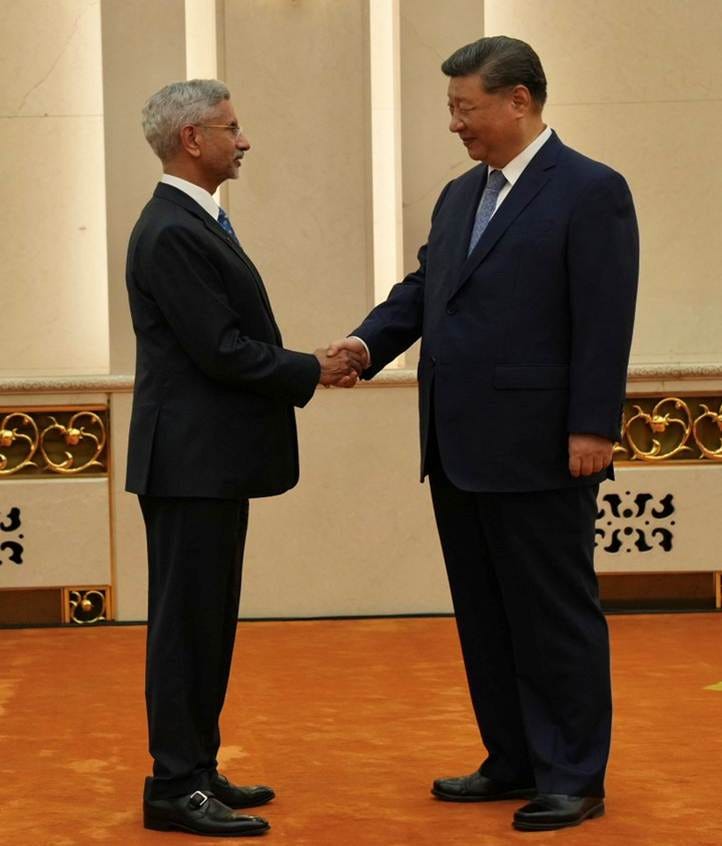
On July 13, 2025, External Affairs Minister Dr. S. Jaishankar embarked on a pivotal three-day visit to China, marking his first trip since the 2020 Galwan Valley clash that strained bilateral ties. Arriving in Beijing, he attended the SCO meeting in Tianjin on July 15, engaging in crucial discussions with President Xi Jinping and Foreign Minister Wang Yi. The visit aims to strengthen India-China relations, with a focus on mutual trust and border peace. A significant step forward is the resumption of the Kailash Mansarovar Yatra, signalling a thaw post-Galwan.
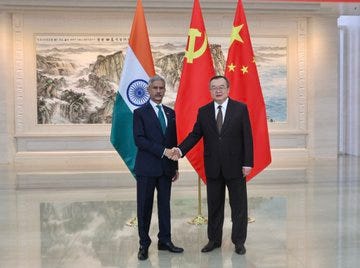
During the SCO summit in Tianjin , External Affairs Minister Dr. S. Jaishankar engaged in significant discussions with Chinese President Xi Jinping and Foreign Minister Wang Yi to strengthen India-China bilateral ties. Dr. Jaishankar emphasized the importance of mutual respect, interest, and sensitivity as foundational principles for advancing the relationship. In his talks with Wang Yi, he advocated for a far-sighted approach, addressing border-related issues, normalizing people-to-people exchanges, and removing restrictive trade measures. The resumption of the Kailash Mansarovar Yatra, widely appreciated in India, was cited as a positive step toward mutual benefit. Jaishankar also stressed the need for open dialogue amid a complex global scenario, reflecting on the 75th anniversary of diplomatic ties. These discussions aimed to build on the 2024 disengagement agreement at Depsang and Demchok, signalling a cautious thaw post-Galwan. The meetings underscored a shared intent to stabilize relations, though challenges like border tensions and trade barriers remain critical focal points for future talks.
Dr. S. Jaishankar also addressed trade and import-export market challenges affecting India in his discussions with Chinese counterparts. He highlighted the need to avoid restrictive trade measures and roadblocks, a subtle reference to the persistent trade imbalance with China. India faces a significant trade deficit, nearing $100 billion in 2024-2025, driven by a surge in imports of electronics, machinery, and chemicals from China, while its exports—dominated by raw materials like iron ore—have declined. Jaishankar urged for mutually beneficial cooperation, signaling concerns over market access barriers that hinder Indian sectors like pharmaceuticals and IT. This reflects India's growing unease about its reliance on Chinese imports, which threaten domestic industries and economic stability, necessitating a push for balanced trade relations.
Despite diplomatic strides to strengthen India-China relations, China’s actions reveal a duplicitous nature that demands India’s utmost caution. Discussions with President Xi Jinping and Foreign Minister Wang Yi focused on mutual respect, border peace, and the symbolic resumption of the Kailash Mansarovar Yatra. However, China’s covert support for Pakistan exposes a troubling betrayal of this goodwill. During recent India-Pakistan tensions following the April 2025 Pahalgam terror attack, China supplied Pakistan with advanced weaponry, including J-10C fighters and PL-15E missiles during Operation Sindoor, and shielded it diplomatically at international forums. This proxy strategy aims to encircle India, exacerbated by China’s economic tactics like trade imbalances—India’s deficit neared $100 billion in 2024-2025—and debt diplomacy in neighbouring countries. Such moves threaten India’s security and sovereignty. To counter these nasty games, India must enhance its military preparedness, deepen strategic partnerships with like-minded nations, and maintain a robust stance on border issues. Vigilance is key to safeguarding India’s interests amidst China’s double-dealing.
As Dr. Jaishankar’s visit concludes, India stands at a crossroads with China. The path forward offers hope through renewed dialogue and cultural exchanges, yet it demands shrewd awareness. India has boldly highlighted China’s backing of Pakistan, urging accountability on the global stage.With global dynamics shifting, India must harness its diplomatic gains while fortifying its strategic position. By fostering resilience and unity, the nation can navigate these complexities, ensuring peace and prosperity prevail. The journey ahead requires wisdom, strength, and an unwavering commitment to national interests.